Stergios Vakalis
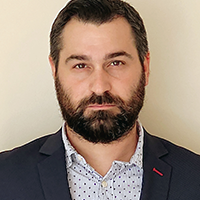
Stergios Vakalis is an Assistant Professor of Energy Processes at the School of Chemical Engineering, NTUA and the Director of the Unit of Energy Processes. He is a member of the Editorial Board for the academic journal Nature Scientific reports (Springer), and a member of the Committee of the Global Waste-to-Energy Research and Technology Council - WtERT®. Together with his Team he works on Sustainable Biofuels and on Green Energy Systems. He teaches courses on Renewable Energy Technologies, Energy Modeling & Analysis and Thermodynamics.
From 2018 to 2109 Dr. Vakalis worked as an Assistant Professor of Research at the Libera Università di Bolzano in the field of thermodynamic analysis and in the production of electricity from renewable sources. In 2016, in the framework of his Postdoctoral dissertation, he was awarded the "National Scholarship of Academic Excellence" by the State Scholarship Foundation. A notable point of his research was the development of the 3T energy efficiency method for the holistic evaluation of waste-to-energy plants. Also, in collaboration with Robert Heimann he has developed the innovative method of frictional pyrolysis which produces biocarbon and bio-oil from agricultural waste and biomass only with the use of friction and without the addition of external heat. Dr. Vakalis is a reviewer for more than 25 scientific journals and has received awards for "Outstanding Contribution to Review" from the following journals: Journal of Cleaner Production (Elsevier), Renewable Energy (Elsevier), Journal of Environmental Management (Elsevier), Energy ( Elsevier), Waste Management (Elsevier), Journal of Analytical and Applied Pyrolysis (Elsevier). He is a permanent member of the Organizing Committee of the annual "International Conference on Sustainable Solid Waste Management" and is a reviewer and evaluator of proposals for the General Secretariat for Research and Technology. Since 2018, Dr. Vakalis is a member of the WtERT (Waste Energy Research and Technology Council) World Council in collaboration with the Earth Engineering Center of Columbia University in New York.